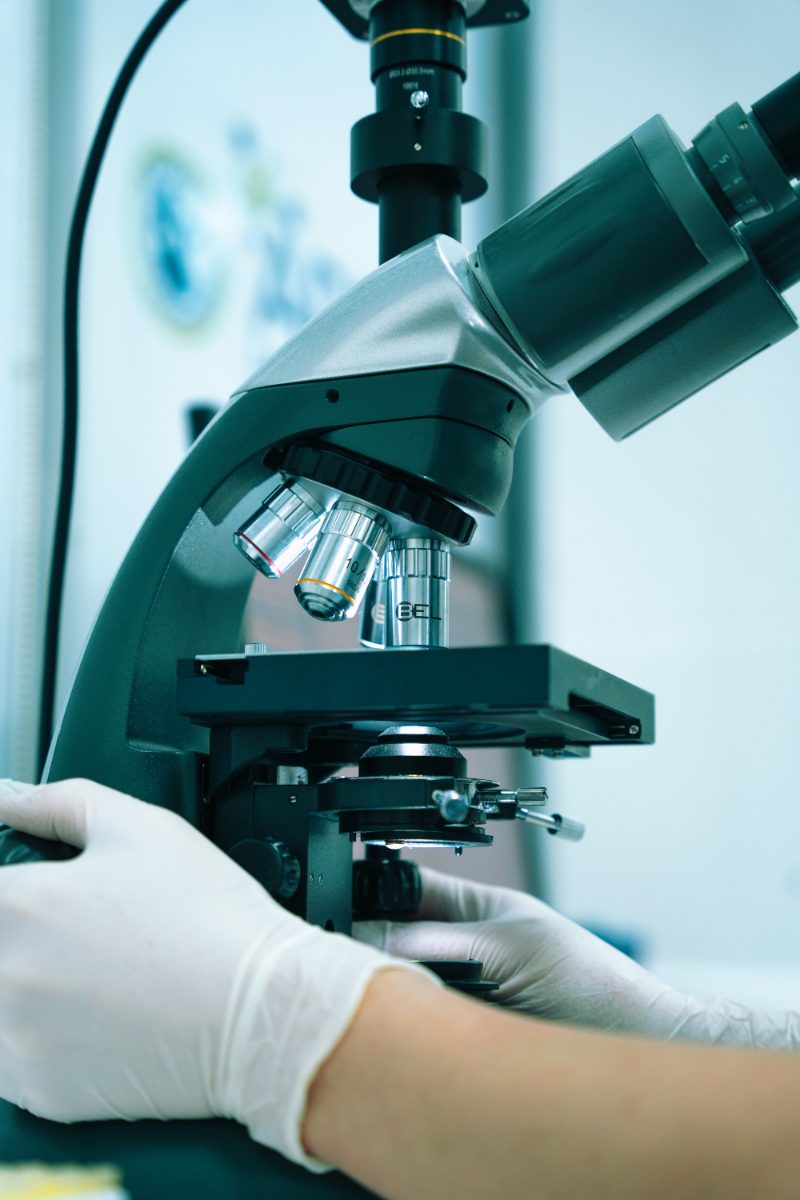
It began in a ground-floor room at Alekh Niwas with a microscope, a centrifuge and one collection counter. Jagamara was quieter then. A family that needed a blood count had two options: a long trip into the city, or a wait of several days for a report to travel back.
Neither felt acceptable for something as ordinary as a fever that would not settle. So the brief was simple, and it has not changed since: run the routine work properly, close to where people actually live.
What has changed is everything around that brief. The manual bench gave way to automated analysers. ECG arrived, then nebulisation, then the neurology and lung diagnostics — EEG, NCV, PFT, audiometry — that used to mean a referral across town. Specialists began holding evening clinics upstairs, so a consultation, the test and the report could finally happen at one address on one evening.
Home collection came next, and it stayed free. An 80-year-old with a walking stick should not have to negotiate an auto-rickshaw to give two millilitres of blood. Today our phlebotomists cover most of Bhubaneswar from six in the morning, and the report reaches the family's phone before the day is out.
Eighteen years on we are still a neighbourhood lab, and that is deliberate. It means the person who takes your call is the person you will see at the counter — and that when a value looks wrong, someone here notices, because they remember you.